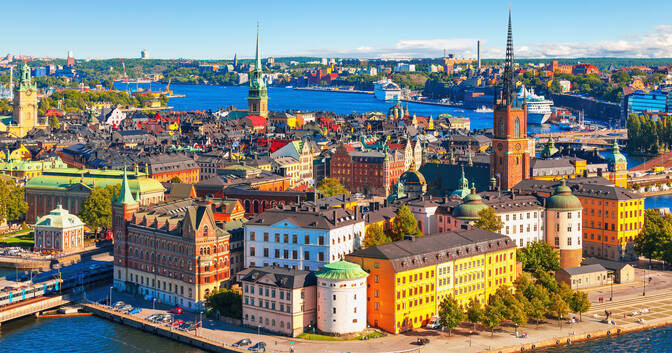
Scandinavia—frequently connected with social security, strong welfare techniques, and cultural cohesion—has gone through major demographic and cultural shifts in the last few decades. Immigration has introduced new languages, religions, and social dynamics, prompting ongoing debates about integration, identity, and the future of the Nordic design.
From Homogeneity to Variety
For Considerably with the twentieth century, Scandinavian societies were being characterised by a high diploma of cultural, linguistic, and institutional homogeneity. Countries like Norway, Sweden, and Denmark shared relatively uniform populations, shaped by typical histories, powerful national identities, and closely aligned social norms. This cohesion played a foundational role in the development of the Nordic welfare model, which depends on high amounts of trust, collective responsibility, and wide general public aid for redistribution.
This demographic steadiness started to change while in the postwar time period, at first by means of labor migration. Through the 1960s and 1970s, workers from Southern Europe, Turkey, and parts of Asia were recruited to aid developing industrial economies. Despite the fact that a lot of have been anticipated to return property, an important selection settled completely, bringing households and setting up communities.
From your late twentieth century onward, the pace and nature of immigration altered. Refugee movements from conflict locations—including the Balkans, the Middle East, and parts of Africa—released new dimensions of diversity. At the same time, globalization and European integration increased mobility within and further than the area, more diversifying populations.
Urban facilities became the focal details of this transformation. Towns for example Oslo, Stockholm, and Copenhagen produced into multicultural environments where many languages, religions, and cultural procedures coexist. Neighborhoods which were after fairly uniform now replicate an array of backgrounds, reshaping everyday interactions in educational facilities, workplaces, and community Areas.
This transition has experienced the two structural and symbolic implications. On a structural degree, establishments made for rather homogeneous populations have had to adapt to new social realities. Instruction programs, labor marketplaces, and community products and services progressively handle linguistic diversity, diversified cultural expectations, and differing socioeconomic starting up points.
Symbolically, the shift troubles lengthy-standing narratives of nationwide id. The idea of a shared cultural baseline is no more self-obvious, prompting ongoing discussions about belonging, integration, plus the definition of “national” tradition.
The go from homogeneity to diversity has not been linear or uniformly seasoned. Results differ throughout locations, communities, and generations. Nevertheless, the overall trajectory is evident: Scandinavian societies are now not defined by uniformity, but by an evolving mixture of identities that continue on to reshape their social and cultural landscapes.
The Integration Model Under Pressure
Scandinavian integration styles have traditionally been developed on universalism: equal use of welfare, instruction, healthcare, and labor markets as the principal system for incorporating newcomers. The fundamental assumption is usually that powerful institutions, combined with substantial-high-quality general public solutions, will minimize inequality and empower immigrants to be economically and socially built-in eventually.
In practice, nevertheless, this design has faced escalating strain. Just one central obstacle is labor current market integration. Scandinavian economies are really controlled, with strong unions, higher wage floors, and an emphasis on formal qualifications. While these attributes shield workers, they also produce barriers to entry for newcomers who might lack recognized credentials, local language proficiency, or professional networks. Consequently, employment gaps in between native-born populations and immigrants persist in many spots.
Instruction units facial area parallel pressures. Educational facilities are envisioned to combine college students from various linguistic and cultural backgrounds whilst maintaining superior tutorial criteria. In neighborhoods with concentrated immigrant populations, disparities in academic outcomes can arise, reinforcing very long-phrase inequalities. These patterns complicate the goal of equivalent possibility that underpins the welfare model.
Household segregation provides An additional layer of complexity. In major city regions, specific districts have become affiliated with better concentrations of immigrant populations. Even though these communities can provide social guidance and cultural continuity, they could also limit conversation with broader Culture if financial and social mobility is constrained. This spatial dimension can make integration not only a policy challenge, but a geographic a single.
In response, governments have modified their methods. Insurance policies progressively emphasize language acquisition, employment incentives, and civic participation. Some international locations have introduced stricter prerequisites for residency or citizenship, linking them to integration benchmarks. Some others have tightened immigration controls to manage the dimensions and tempo of arrivals.
These shifts replicate a broader stress: protecting inclusive welfare techniques while guaranteeing their long-expression sustainability. The Nordic model is dependent upon widespread participation and have faith in in establishments. When integration outcomes tumble quick, political tension grows to recalibrate guidelines.
The end result is really a design in transition. The rules of universalism stay, Nonetheless they are being reinterpreted in response to new demographic realities. Integration is now not assumed to adhere to mechanically from access to companies; it is progressively dealt with as being a structured, conditional approach demanding active participation from the two people today and institutions.
Identification and General public Discussion
Immigration has shifted concerns of nationwide id in Scandinavia from implicit assumptions to express public debate. Societies that after relied over a mainly shared cultural framework now face the activity of defining belonging in additional pluralistic conditions. This has built identity not only a cultural situation, but a political and institutional just one.
General public discourse increasingly centers on values as an alternative to ethnicity by yourself. Principles such as gender equality, secularism, freedom of expression, and have confidence in in community institutions in many cases are framed as Main features of Scandinavian id. The talk is less about regardless of whether variety exists and more about how much it may lengthen with no altering these foundational norms. This reframing displays an try and outline identification in civic as opposed to purely cultural phrases, even though the boundary among the two is usually contested.
Political responses differ across countries. In Denmark, debates have tended to emphasise cultural cohesion as well as threats of parallel societies, bringing about additional restrictive integration and immigration procedures. Sweden has historically promoted multiculturalism and openness, even though growing considerations about crime, segregation, and social fragmentation have shifted parts of The talk towards stricter actions. Norway usually occupies a middle ground, combining relatively open up procedures with gradual tightening and an emphasis on integration outcomes.
Media coverage and general public narratives Enjoy a big part in shaping perception. High-profile incidents—irrespective of whether relevant to criminal offense, social unrest, or integration problems—can amplify issues and impact coverage path. Concurrently, results stories of integration, entrepreneurship, and cultural contribution receive comparatively fewer consideration, producing an imbalance in how immigration is perceived.
The talk also displays generational and geographic variations. Urban parts, in which range is much more visible and normalized, generally strategy identity far more flexibly. Rural regions, with fewer direct publicity to immigration, may possibly view improvements a lot more cautiously. Young generations, increasing up in additional varied environments, have a tendency to undertake broader definitions of belonging.
Ultimately, identification in Scandinavia is no longer a set concept but an evolving negotiation. Immigration has designed visible the fundamental values that determine these societies, forcing them to articulate what was after taken for granted. The end result continues to be open, formed by ongoing dialogue between tradition, plan, and lived encounter.
City Realities and Day to day Integration
Integration in Scandinavia is most tangible on the city amount, in which procedures fulfill lifestyle. Metropolitan areas which include Oslo, Stockholm, and Copenhagen perform as Principal sites of interaction amongst newcomers and founded populations, creating them central to how integration succeeds or fails in follow.
Work is really a critical determinant. Access to the labor industry not simply presents earnings but in addition facilitates language acquisition, social networking sites, and a way of belonging. Having said that, entry barriers—including credential recognition, language demands, and confined professional networks—can delay participation. When employment is unevenly distributed, it reinforces broader patterns of inequality which might be obvious in unique neighborhoods.
Education plays an equally crucial part. Educational institutions work as early integration environments wherever children from different backgrounds interact and adapt to shared norms. In nicely-resourced regions, This tends to foster cohesion and upward mobility. In additional segregated districts, on the other hand, educational facilities may perhaps facial area concentrated worries, including language gaps and different amounts of prior education and learning, which could have an impact on prolonged-expression outcomes.
Housing patterns further condition integration. In several Scandinavian metropolitan areas, immigrant populations are disproportionately concentrated in specified urban districts. These locations often provide affordability and Group guidance but could also limit exposure to broader Culture if mobility is restricted. As time passes, this kind of spatial focus may result in parallel social constructions, exactly where conversation throughout groups becomes a lot less Repeated.
Public establishments—transport, healthcare, Group centers—serve as day-to-day Speak to points. Their accessibility and high-quality affect how people navigate town and interact with broader society. Productive institutions can cut down friction and encourage inclusion; strained or uneven solutions can deepen divides.
Social conversation outdoors official techniques is Similarly crucial. Workplaces, public spaces, and civic organizations generate possibilities for casual Make contact with, which happens to be essential for setting up have faith in. Without these interactions, integration pitfalls remaining administrative instead of social.
City realities highlight that integration is just not a single coverage consequence but a cumulative method formed by multiple variables. It depends on how men and women live, perform, analyze, and move in the town. Achievement is for that reason uneven and context-dependent, reflecting the complexity of translating countrywide policies into every day working experience.
An Identity Even now in Development
Scandinavia’s evolving id isn't relocating towards a hard and fast endpoint but unfolding being an ongoing procedure shaped by demographic transform, plan adaptation, and everyday expertise. Immigration has launched new cultural levels into societies at the time defined by relative uniformity, creating identification considerably less static plus more negotiated.
One important shift would be the motion from implicit to specific definitions of belonging. Earlier, shared norms and cultural references demanded little articulation. Today, these exact same factors are progressively debated, formalized, and from time to time contested. Id is staying reframed concerning values—such as equality, trust, and social responsibility—instead of purely heritage or origin. Nonetheless, translating these abstract ideas into inclusive, useful frameworks stays complicated.
Generational adjust plays a major part. More youthful populations, specifically in urban locations, often grow up in numerous environments where by various identities coexist. For them, hybridity is normalized rather than Remarkable. This contrasts with more mature frameworks that emphasised cultural continuity and cohesion. With time, these generational distinctions are likely to reshape how countrywide identification is comprehended and expressed.
Institutionally, the challenge lies in adapting units designed for homogeneity to far more varied populations with out weakening their Main features. Welfare designs, education units, and labor marketplaces should remain helpful even though accommodating different linguistic, cultural, and socioeconomic backgrounds. This requires ongoing adjustment in lieu of a single-time reform.
There is also an exterior dimension. Scandinavia’s worldwide graphic—as open up, egalitarian, and stable—interacts with inside debates about integration and identity. Insurance policies and community discourse are influenced not only by domestic problems but additionally by how these societies position by themselves internationally.
Importantly, identity development is not only driven by coverage. It is shaped through day-to-day interactions—how people get the job done with each other, share Areas, and negotiate differences in follow. These micro-level dynamics progressively impact broader societal narratives.
The result is undoubtedly an identity that is certainly neither fully cohesive nor fragmented, but in transition. It incorporates things of continuity alongside emerging sorts of diversity. As opposed to changing one design with A different, Scandinavia is layering new realities onto existing constructions.
During this sense, identification is not really becoming dropped but redefined. It has become much more intricate, extra explicit, and much more adaptive—reflecting the realities of societies that happen to be now not uniform, but still look for cohesion in shifting ailments.
Remaining Thoughts
Scandinavia’s expertise with immigration and integration displays a broader transformation from steady homogeneity to managed variety. The area’s energy has extensive rested on trust, powerful institutions, and shared norms, but these foundations are actually currently being examined and reinterpreted. Integration is no more assumed to observe quickly from usage of welfare systems; it requires active participation, policy adaptation, and sustained social interaction.
What emerges is here not a breakdown of identity, but a far more complex version of it. Scandinavian societies are redefining belonging in ways in which equilibrium continuity with improve, custom with inclusion. Results continue being uneven, and debates generally mirror true tensions amongst openness and cohesion.
Still the method by itself is significant. Instead of remaining static, these societies are actively negotiating their long term shape. Immigration has built id additional seen, a lot more debated, and eventually a lot more dynamic—turning it into some thing continuously fashioned in lieu of Traditionally mounted.